
Control the silhouette
Plain backgrounds and complete object bounds reduce ambiguity before inference begins.
Cardona Pipeline Tools / Living product evidence
From one image to a reviewable 3D candidate.
MeshForge runs Stable Fast 3D locally, reopens every GLB in Blender, measures the mesh, and keeps download locked until a person reviews the candidate. The workflow proves a controllable path to useful visual geometry. It does not claim CAD accuracy.
Working thesis
Image-to-3D can create useful visual starting points quickly. Production value depends on what happens next: source control, reproducible settings, static inspection, visible defects, and a person who decides whether cleanup is justified.
Plain backgrounds and complete object bounds reduce ambiguity before inference begins.
The saved GLB is inspected after generation. The page reports that artifact, not a preview alone.
Generation success does not unlock download. Review and publication remain separate decisions.
Portfolio benchmark / 2026-10-09
The ladder moves from a compact manufactured form to thin aircraft structures. Each case is useful even when it fails because the same inspection contract records the failure.
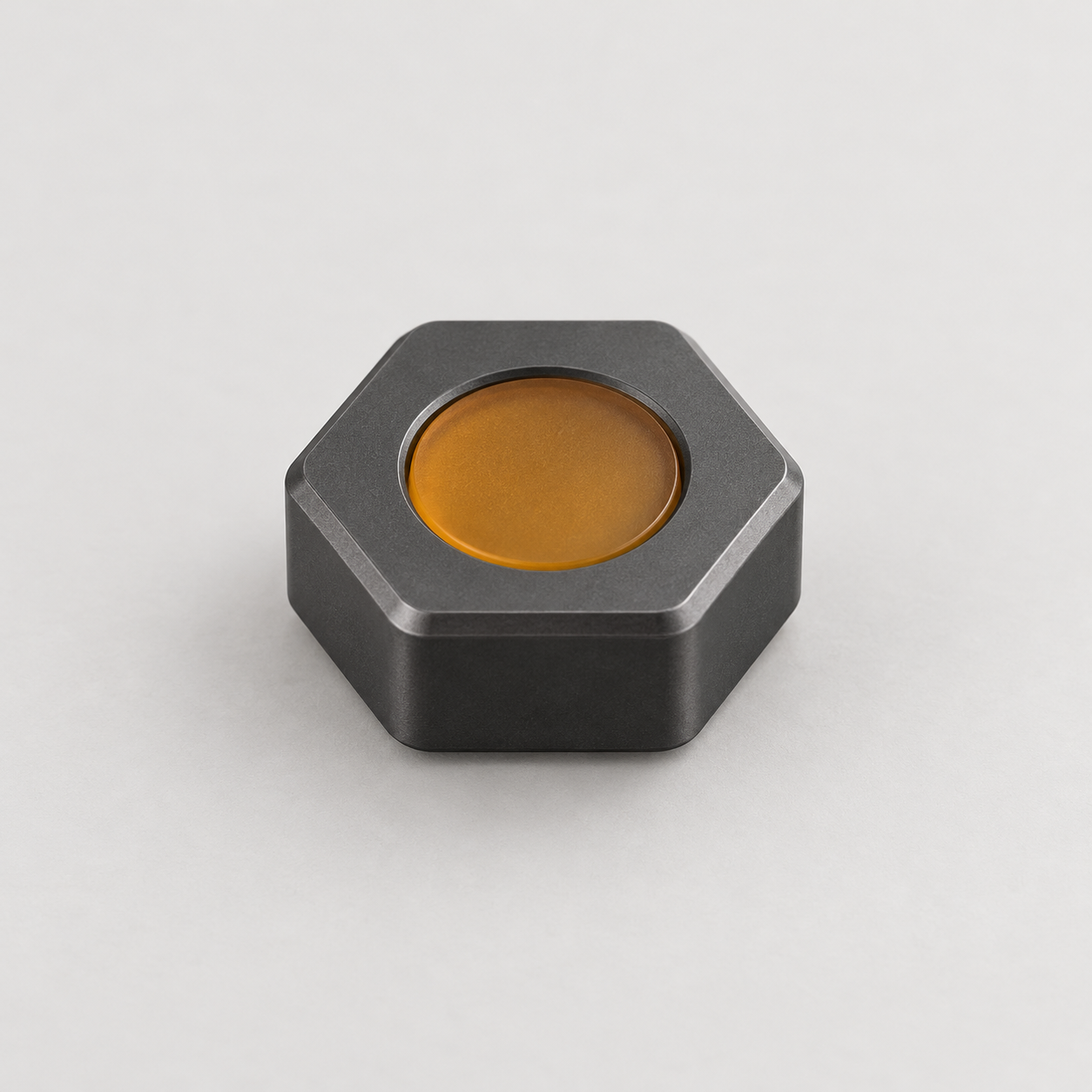
Case 01 / Simple
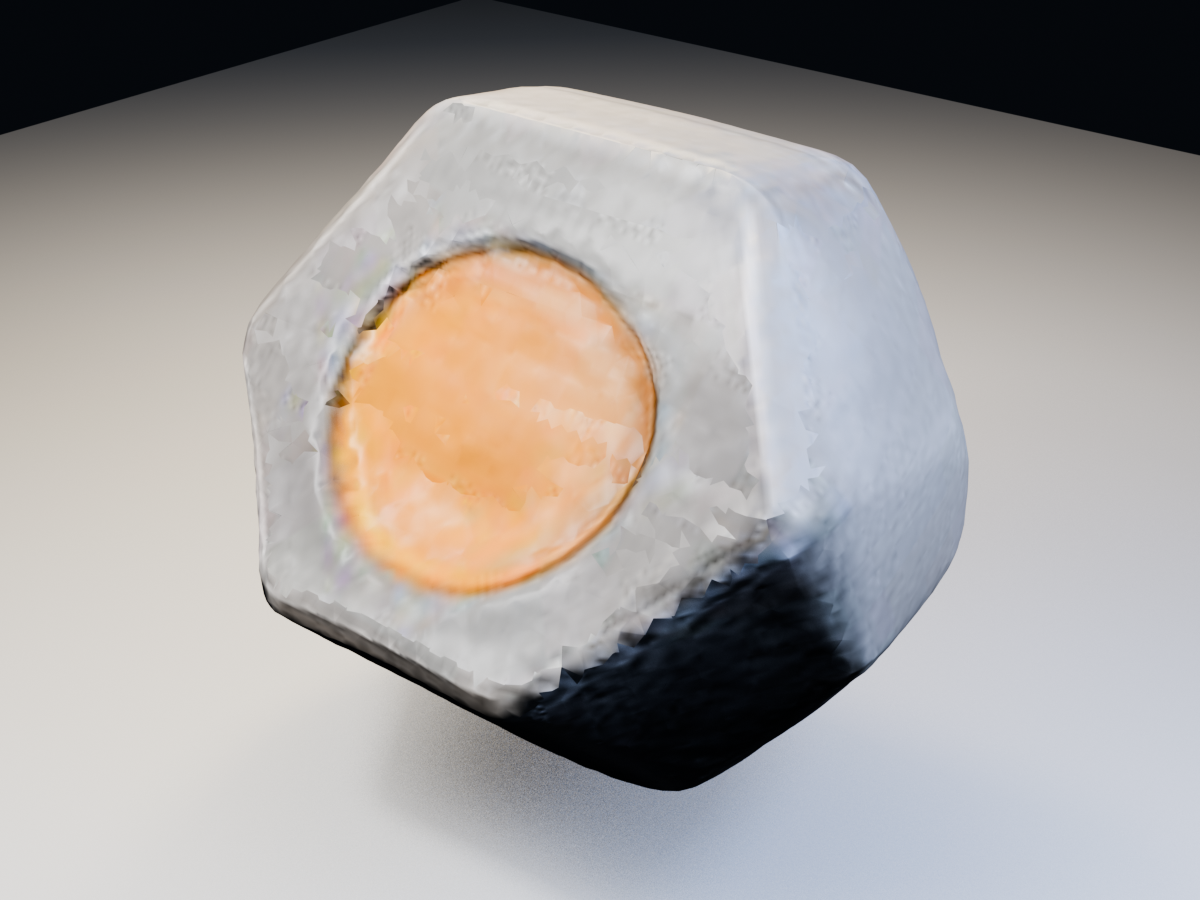
Tests silhouette recovery, thickness, bevels, and one recessed surface without thin appendages.
Loading interactive candidate.
Inspect the artifact: drag to orbit, scroll or use + and - to zoom, and use arrow keys after focusing the viewer. Download exposes the measured benchmark file for independent inspection; it does not change its review-required production status.
What to inspectDoes the candidate preserve the hexagonal body, shallow top inset, and visible thickness without inventing an unstable underside?
Production readingThe basic form survives, including the inset. After attribute splits are welded, the candidate is one logical manifold component. Its softened form, fused material role, and missing semantic labels still make it a visual blockout.
Token accuracy program / Pilot v4
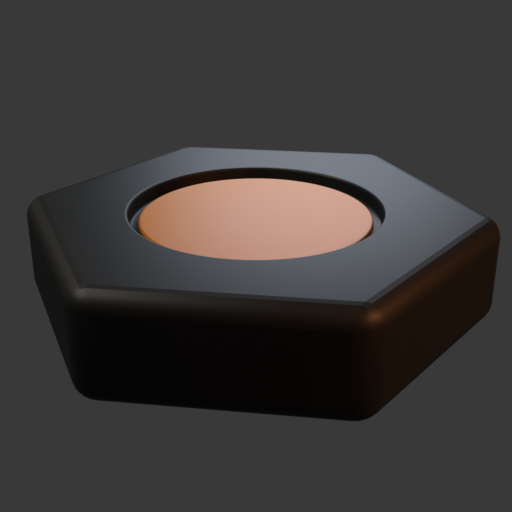
Version 4 reopens the exported GLB and verifies the graphite body and amber inset as distinct PBR roles. Geometry and smoothing remain fixed while base color, roughness, metallic response, opacity, transmission, and emission become measurable.
Loading the corrected v4 GLB.
Inspect the verified artifact: compare material response, wireframe topology, RGB normal direction, and false-color body and inset IDs without leaving the viewer.
Material Reconstruction v1
The source sampler measured median graphite #464442 and amber #a66d28. The verifier then reads PBR values after GLB reimport, while these renders expose the resulting surface response.
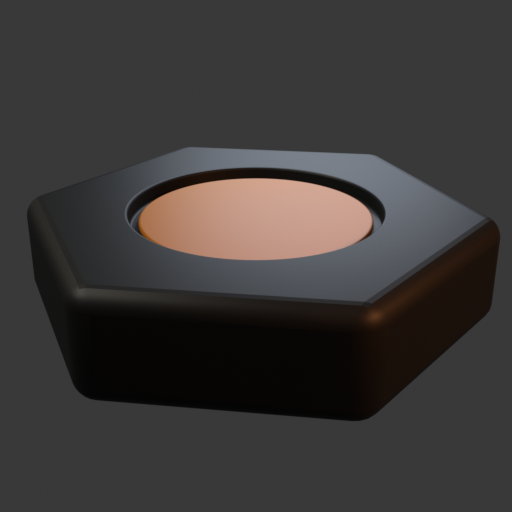
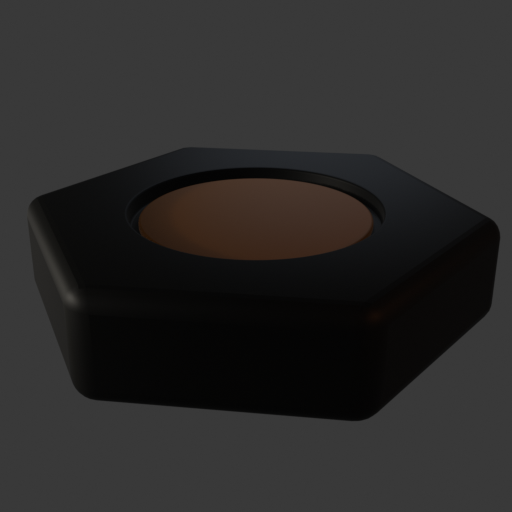
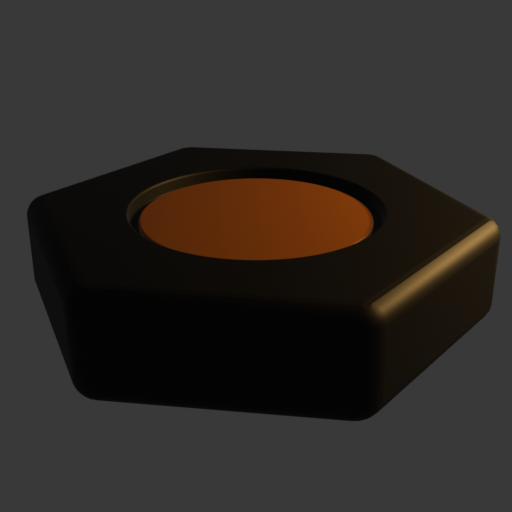
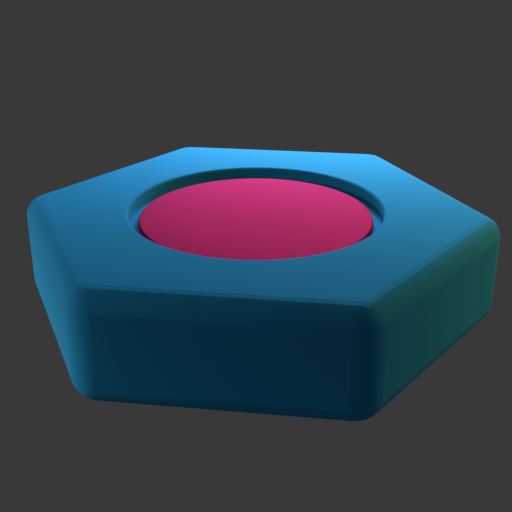
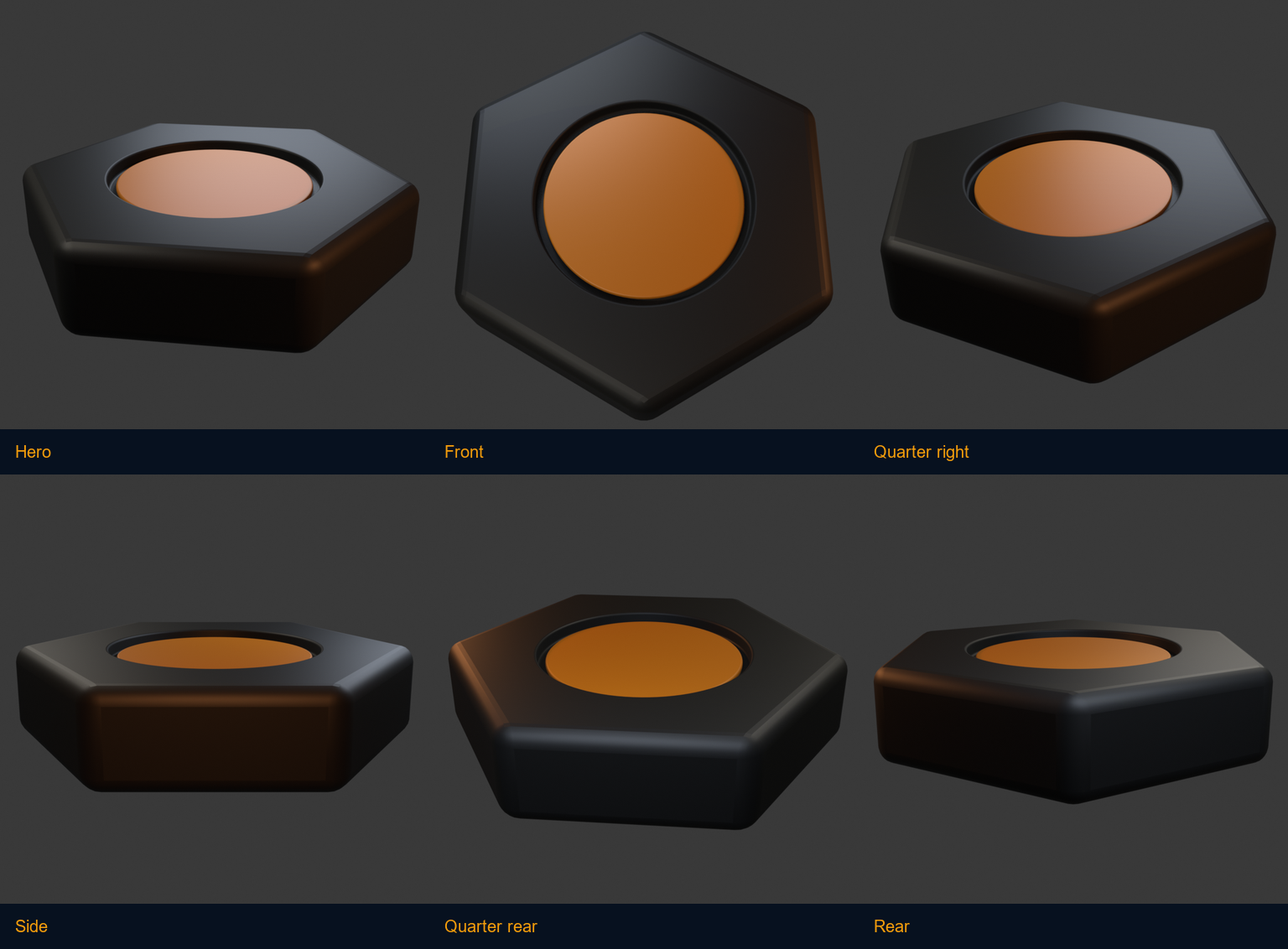
The curriculum advances from one hero view to an opposed pair, a three-view shape set, and the complete six-view set. Views from one design never cross train, validation, and test splits.
Bounded geometry and PBR variations scale from the six-design pilot to 5,000 deterministic designs.
Height, circle coverage, signed inset depth, lip width, symmetry, topology, and materials produce an explainable score.
Four stages add hidden-view evidence without leaking one design across data splits.
Named graphite-body and amber-inset roles make material separation measurable.
A token-specific plan rebuilds the tall body, cuts the cavity, and lowers the insert below the top plane.
Explicit normals keep planar faces flat and bevel, cavity, and inset transitions smooth after GLB export.
Reimported PBR values and four controlled renders verify role identity, color, roughness, metallic response, and opacity.
Hollow vessel program / Pilot v2
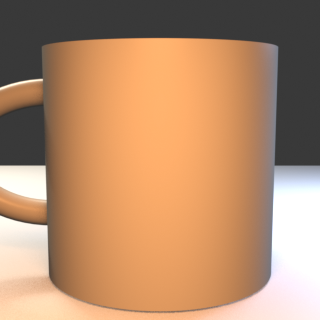
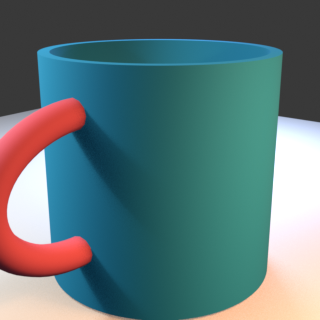
Eight sprints now cover three vessel classes. A ceramic mug verifies its cavity and handle. A wine glass adds a thin rotational profile and transparent optics. An original yunomi-inspired milk glass adds a gentle taper, thick lip, low foot ring, and softly translucent opal material.
Canonical case 01 / Ceramic
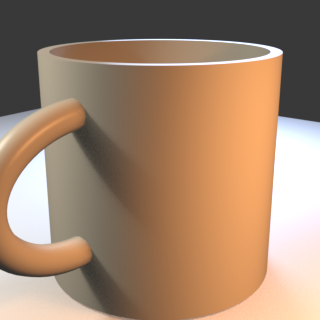
Loading the ceramic mug GLB.
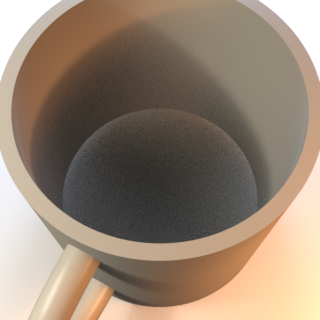
Inspect the vessel: use the section cut to expose the cavity and bottom thickness, then compare normals, wireframe, and part IDs.
Canonical case 02 / Optical
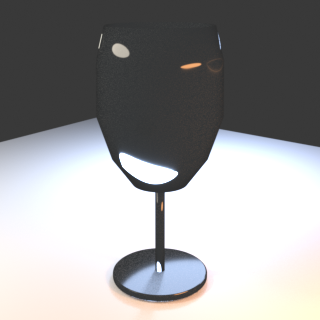
Loading the wine glass GLB.
Inspect the vessel: use the section cut to expose the thin bowl wall, then verify the bowl, stem, and foot as separate semantic parts.
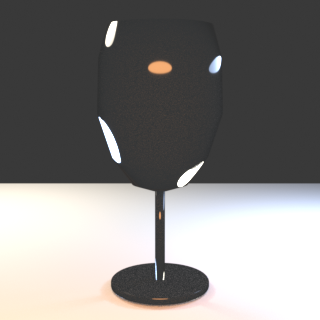
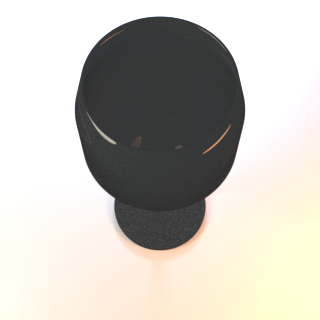
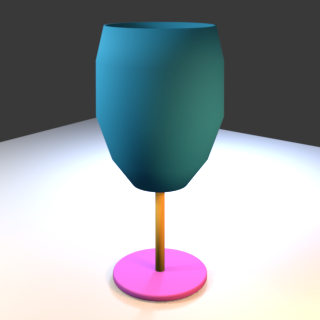
Canonical case 03 / Opal glass
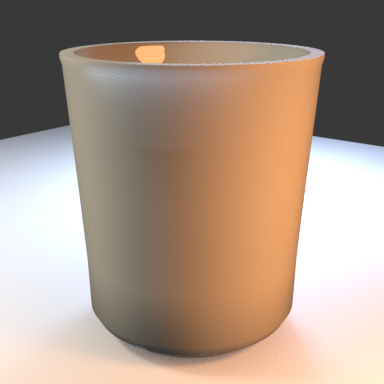
Loading the milk-glass GLB.
Inspect the vessel: use the section cut to expose the thick lip and deep cavity, then compare body and foot-ring IDs with the exported normals.
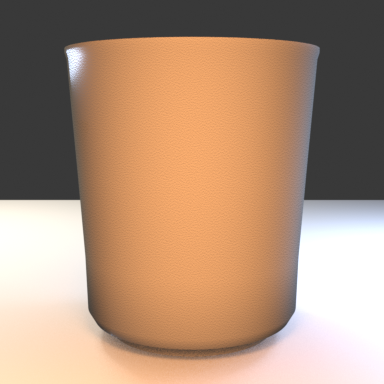
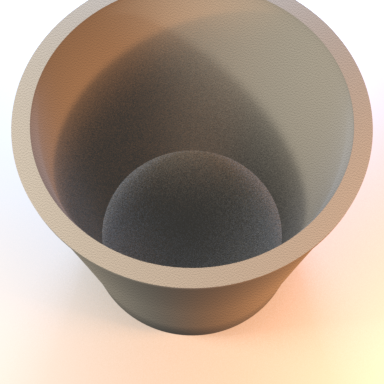
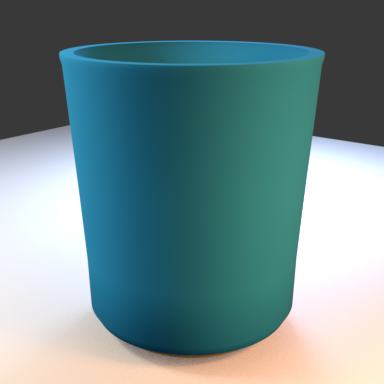
Real openings, interior cavities, walls, and bottoms replace surface-only silhouettes.
Clearance, tube thickness, attachment span, and semantic separation become measurable.
Bowl, stem, foot, profile symmetry, and thin walls receive independent contracts.
Transmission, roughness, IOR, opacity, and emission survive export and reimport checks.
Six GLBs, 60 views, explainable scores, and eight gates form the first repeatable pilot.
Taper, thick lip, cavity depth, and a low foot ring define the original yunomi-inspired profile.
Warm color, partial transmission, soft roughness, and glass-range IOR form a bounded contract.
Nine GLBs and 90 views pass the same reopened-artifact evidence boundary.
Liquid benchmark / Pilot v2
Six sprints add sealed coffee, red wine, and milk volumes plus a separate coffee-foam cap. Blender reopens every GLB and checks containment, fill, foam coverage, thickness, materials, topology, parts, and normals. A separate browser surface previews bounded ripples and a procedural foam texture without changing the downloadable artifact.
Loading the coffee-foam preview vessel.
Try the preview: enable coffee to pause rotation and enter a fixed top-quarter view with the coffee ring and white foam visible. Use Liquid view to restore that framing after orbiting. Drag across the vessel to disturb the coffee below. The download keeps the verified 68% coffee volume and separate 76% surface-area foam cap.
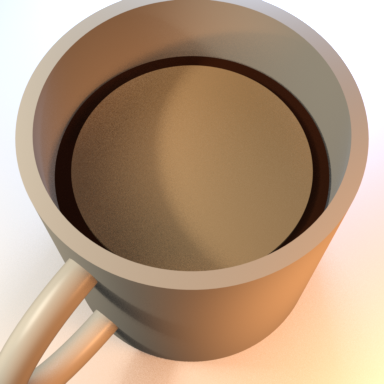
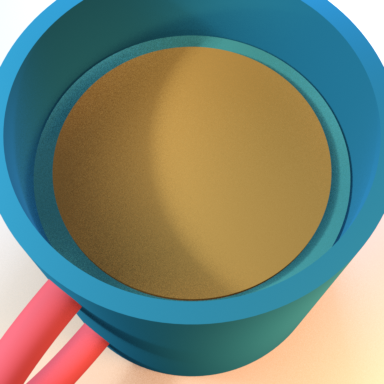
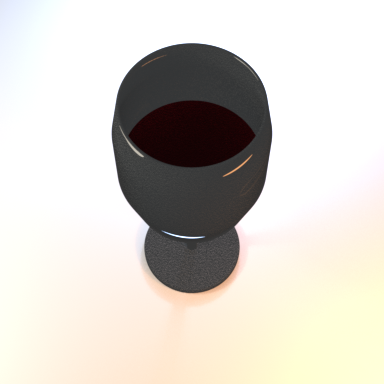
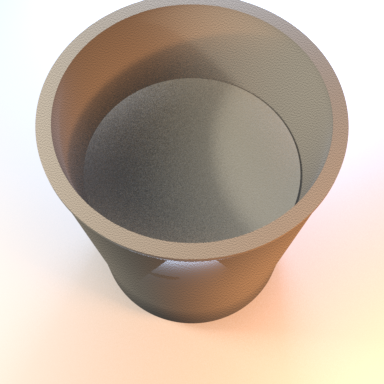
Liquid profiles derive from measured vessel cavities and export as named manifold parts.
Fill, rim clearance, wall gap, surface planarity, and volume survive GLB reimport.
Coffee, red wine, and milk retain separate calibrated PBR contracts.
A fixed-step height and velocity surface adds optional browser interaction with a static fallback.
Nine GLBs and 93 views passed every reopened-artifact gate at 100/100.
A separate matte cap passes coverage, thickness, contact, containment, material, topology, and part gates.
Why test a V-22 class aircraft?
A tiltrotor combines a broad symmetrical airframe with very thin blades, separate nacelles, deep gaps, and an underside the camera cannot see. A single photograph also freezes one mechanical configuration. Those properties make the category a useful stress test and a poor candidate for dimensional claims.

Public-domain U.S. government photograph. Used to test visual reconstruction limits. It is not a source for engineering geometry, dimensions, flight simulation, or manufacturing.
Review source and attributionPipeline walkthrough
The workflow separates model output from measured evidence and measured evidence from human approval.
Source contract
PNG or JPEG, 20 MB maximum, complete silhouette, plain background, and enough margin to separate the object from the frame.
Local generation
Stable Fast 3D runs in a pinned GPU container with network access disabled. Profiles expose a bounded set of texture and remesh controls.
Static inspection
Blender measures vertices, triangles, connected components, boundary and non-manifold edges, UV layers, materials, and packed textures.
Cleanup planning
A bounded planner converts findings into a repair sequence and estimated cleanup distance. It cannot edit the candidate or approve it.
Human review
The viewer supports material and wireframe modes. The reviewer records explicit acknowledgment before candidate download becomes available.
Implemented baseline
The official Stable Fast 3D chair reference completed through the current interface. The output reopened successfully and retained textures. Topology findings correctly kept the job at review required.
Operating boundaries
These limits define what the current implementation can support and where a separate workflow must take over.
The candidate has no authoritative dimensions, parametric history, tolerances, or manufacturing intent.
One image cannot verify the far side, underside, internal volume, or mechanical articulation.
The planner recommends work. It cannot alter geometry, merge components, or silently replace the source.
Approval unlocks a candidate download only. Publication and downstream use require separate authority.
Document review / Implemented October 17, 2026
A recorded benchmark now becomes a one-page document with paired source and candidate images, measurements, evidence dates, and a pending decision. A local review screen checks package hashes, compares text, and binds the document handoff to the reviewed report and previews.
Walk the document pipeline